Welcome back
It’s the second week of 2026, and if you thought the year would start quietly…well, I love your optimism.
If you’re new here, please know how appreciative I am of your valuable time. The desire to save you time and keep you connected to the world clients live in was a huge inspiration for this newsletter. Read the origin story here. My inbox is always open.
This week, we’ve got memes (and more memes), we’ve got deepfake scandals, and we’ve got the only hockey rivalry that matters.
With care,
Enid
This week 🗓️
🏆 Golden Globes: Chaos, Pins, and Leo

🧩 What’s happening:
The 83rd Golden Globes happened last Sunday, and while the statues are nice, the internet really only cares about three things: the memes, the drama, and apparently, the betting odds. Leonardo DiCaprio went viral (again) for his animated facial expressions during a commercial break. Fans are calling it the first great meme of 2026. Meanwhile, stars like Mark Ruffalo, Ariana Grande, and Jean Smart used their platform to wear “Be Good” and “ICE OUT” buttons protesting against U.S. Immigration and Customs Enforcement (ICE) following the fatal shooting of Renee Good last week.
💬 Why it matters for therapists:
Celebrities are increasingly acting as "cultural proxies" for social justice and emotional expression. Whether it’s Leo’s "meme-able" humanity or the collective grief represented by the anti-ICE pins, these moments give clients an outlet to process complex feelings through a public lens.
🪞 How it may show up in the room:
Celebrities as role models for political reasons rather than on-screen roles.
Pop culture validating anxiety or grief over current events.
Client projecting internal anxieties onto parasocial relationships.
🛠️ What therapists can do:
Use cultural touchstones as metaphors.
Explore emotions amplified by media consumption.
Getting a reference a client drops in session can be a great moment for the therapeutic relationship 👏
🔗 Go deeper:
💡 The bottom line:
Antiquated or “cringe” as they may may, moments like the Golden Globes still provide a cultural nexus that draws eyes from all corners.
🏒 The Heated Rivalry Era
🧩 What’s happening:
If you haven't seen the breakout gay hockey romance drama Heated Rivalry on HBO Max yet, what are you even doing? (Jk—maybe, like me, you enjoy life under a rock sometimes). The show brings a gay love story to the mainstream, but with the wild fandom comes criticism and scandal. Including swirl around why the show “couldn’t be made in the US” and criticism of its portrayal of “queer intimacy.” For fans of the hockey romance, 2026 is just heating up. Hudson Williams and Connor Storrie presented together at the Golden Globes, Season 2 starts filming this summer, and author Rachel Reid just confirmed a sequel book, Unrivaled, coming September 2026.
💬 Why it matters for therapists:
The show explores intense, high-stakes relationships and queer identity within traditionally "macho" spaces. Fandoms like this often provide a safe community for clients exploring their own identity or seeking "emotional escapism."
🪞 How it may show up in the room:
“Shipping” as a way to process relationship desires or frustrations.
Increasing comfort—or discomfort—with the blending of emotions and the traditionally masculine.
🛠️ What therapists can do:
Explore what resonates with clients—the secrecy? The rivalry?
Validate the draw of a powerful love story, especially in an increasingly disillusioned present.
Notice our own reactions and get curious about any biases.
🔗 Go deeper:
“The Delicious Anticipation — And, Yes, Release — of ‘Heated Rivalry’” — The New Yorker, Jan 2026
“Why Heated Rivalry Couldn’t Be Made in the US” — BuzzFeed, Jan 2026
“Jordan Firstman Slams Heated Rivalry” — GayStarNews, Dec 2025
💡 The bottom line:
It’s not just romantasy book binging—romance is having a moment and our collective desire for love that feels powerful and heroic is palpable.
⬛️ Grok’s “Digital Undressing” Scandal
🧩 What’s happening:
Elon Musk's AI chatbot, Grok, is under fire (and investigation) after users exploited a new image editing feature to "digitally undress" photos of unsuspecting women and children. The backlash has been swift and global. The UK's Ofcom has launched a formal investigation, and EU Commission President Ursula von der Leyen called the behavior "unthinkable." While X has restricted image generation to paid subscribers, critics argue paywalling a harassment tool isn't exactly a safety fix. California is investigating and Indonesia and Malaysia have already blocked the tool.
💬 Why it matters for therapists:
Let’s be clear, this is sexual abuse. For clients, it can heighten feelings of digital vulnerability and trigger deep-seated trauma related to objectification or loss of control over one's own image. For therapists, I expect this will show up in mandated reporting cases soon.
🪞 How it may show up in the room:
Increased vigilance about posting photos online.
Alternately, a "why bother" attitude toward digital privacy.
Anxiety or body dysmorphia rooted in the fear that their likeness can be manipulated.
🛠️ What therapists can do:
Validate the sense of violation.
Support clients in establishing digital boundaries that feel safe for them.
Avoid victim-blaming.
🔗 Go deeper:
“Grok turns off image generator for most users after outcry over sexualised AI imagery” — The Guardian, Jan 2026
“Musk’s Tool Under Fir for Digital Undressing” — CNN, Jan 2026 (video)
“AI tool Grok used to create child sexual abuse imagery, watchdog says” — The Guardian, Job 2026
💡 The bottom line:
Boundaries were obliterated. Consent went out the window. Therapists need to know because it’s only a matter of time before this shows up in an ethical/legal question.
🤑 A Dystopian Betting Scene: Polymarket and the Globes
🧩 What’s happening:
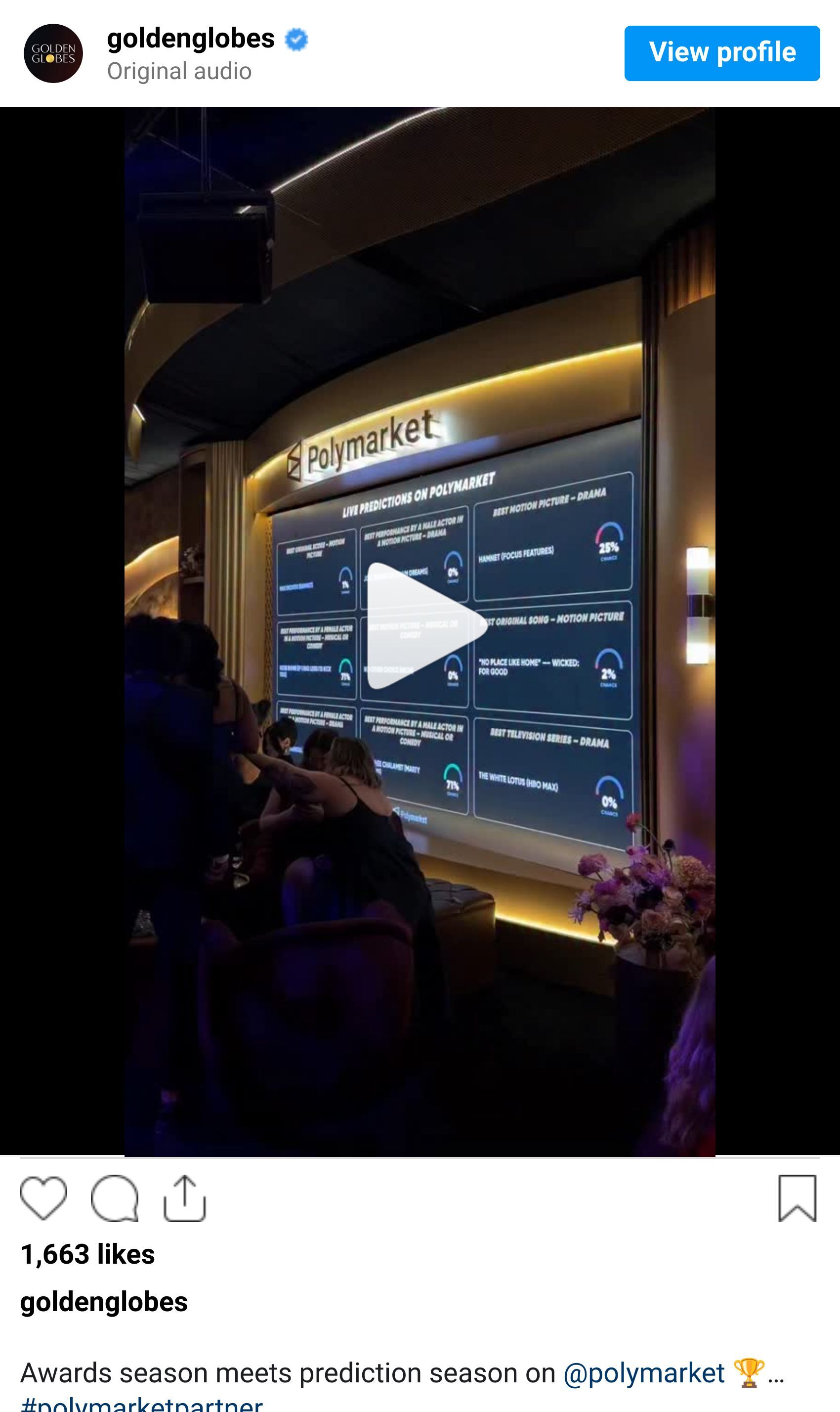
If you felt like the Golden Globes broadcast had "Hunger Games" energy, you weren't alone. The ceremony partnered with Polymarket, showing live betting odds on screen before commercial breaks. Social media slammed it as "cringe" and "a new low," but the crypto-based betting market is taking a victory lap: they correctly predicted 26 out of 28 winners. Expect to see this everywhere in 2026—we are officially in the era of gamified content.
💬 Why it matters for therapists:
The gamification of everything—even awards shows—can be a slippery slope for gambling addictions and tap into our innate fear of being in the out group. It leverages social psychology to shifts the focus to "knowing” the outcome in an uncertain world, playing on the fine line between anxiety and excitement.
🪞 How it may show up in the room:
Distress in clients with a history of gambling problems as betting becomes mainstream.
Excitement or confusion over the “wisdom of crowds.”
Those with obsessions being drawn to compulsively check the market.
🛠️ What therapists can do:
Focus on uncertainty tolerance.
Work on staying present in the experience of an event rather than being consumed by the odds.
Help clients recognize the difference between "informed prediction" and actual control.
🔗 Go deeper:
“Polymarket CEO takes a victory lap after prediction market correctly calls 26/28 Golden Globe winners” — Business Insider, Jan 2026
“The Shocking Idea Behind Polymarket: Truth Has a Price Tag” — Din Amiri on Medium, Oct 2025
💡 The bottom line:
“Wait and see” is out, “bet and see” is in, upping the stakes on even the most everyday moments.
Down the rabbit hole
🤓 What Freud said about gambling
“The psychoanalytic understanding of gambling problems rests on the foundation formulated by Freud (1928), who thought that it was not for money that the gambler gambled, but for the excitement. In fact, Freud speculated that some people gamble to lose.
He thought this tendency was rooted in a need for self-punishment, to expiate guilt, and, for the male gambler, because of ambivalence toward the father.
Bergler (1936, 1943, 1958) expanded on this concept of masochism, emphasizing the pathological gambler's rebellion against the authority of the parents and specifically the reality principle they represent.”1
1 National Research Council (US) Committee on the Social and Economic Impact of Pathological Gambling. Pathological Gambling: A Critical Review. Washington (DC): National Academies Press (US); 1999. 6, Treatment of Pathological Gamblers. Available from: https://www.ncbi.nlm.nih.gov/books/NBK230629/
