Welcome
More than screen-deep
A recent study found that a one-week social media reduction among young adults led to decreases in anxiety (16.1%), depression (24.8%), and insomnia (14.5%) symptoms. For the most part, I view social media as an unnecessary evil, and getting off it was one inspiration for this newsletter.
But…
Once in a while, a viral trend goes more than screen-deep and brings humanity to our feeds. The recent “in your 20s…” trend (second story below) is a reminder of the warm bodies on the other side of the scroll and the moments that give our lives meaning.
That’s something we’d do well to remember as we chart the murky waters of AI agents (first story below). Learning from what came before, we as therapists are well-positioned to guide a more mindful adoption for ourselves and our clients.
Here’s to you in your 20s…potentially social media-free and contemplating becoming a therapist 🧐
With care,
Enid
This week 🗓️
🤖 Battle of the AI Bots, And Why It’s Concerning for Therapists
🧩 What’s happening
The battle for provenance between OpenAI, Gemini, etcetera continues to escalate. Competition may fuel ingenuity, but it’s also a perfect set up for user-baiting and pushing out products that aren’t ready. New research shows that 13.1% of U.S. youth—about 5.4 million teens—use generative AI for mental-health advice. Last month, a well-reported New York Times piece uncovered nearly 50 cases of people having mental health crises during conversations with ChatGPT. Nine were hospitalized; three died. One factor: desire to drive user engagement caused a premature model launch. OpenAI’s response, in part, has been to integrate a crisis helpline prompt into their services. It leaves much to be desired (as does their age prediction model). I highly recommend reading the Times article and Therapist Brief’s take on the crisis line, here.
💬 Why it matters for therapists
Clients—especially teens—are already consulting AI for emotional regulation, validation, and anonymity. This raises questions about dependency, accuracy, and crisis ethics. Rather than wholly denouncing AI, therapists would do well to understand it’s benefits and shortcomings, and to explore its role in our clients’ lives.
🪞 How it may show up in the room
Clients citing AI or leveraging it between sessions.
Confusion about what AI can and cannot do clinically.
Fear or shame causing clients to turn to AI for sensitive questions.
🛋️ What therapists can do
Discuss AI as a tool, not a relationship.
Clarify limits of crisis support and clinical care.
Explore the emotional meaning behind seeking AI over people.
🔗 Go deeper
⭐️ Must read! “What OpenAI Did When ChatGPT Users Lost Touch with Reality” — The New York Times, Nov 2025
“Use of Generative AI for Mental Health Advice Among US Adolescents and Young Adults” — McBain et al., Nov 2025
“OpenAI's ChatGPT 5.1 versus Google's Gemini 3: Here's how the models stack up in the AI race” — Business Insider, Dec 2025
“Crisis Helpline Support in ChatGPT” — OpenAI, Nov 2025
💡 The bottom line
AI is an imperfect psychological first responder, but we’ll inevitably see it in that role regardless. As providers, it’s a reality we can’t ignore.
🔮 New TikTok Trend Asks What Moments Matter Most
🧩 What’s happening
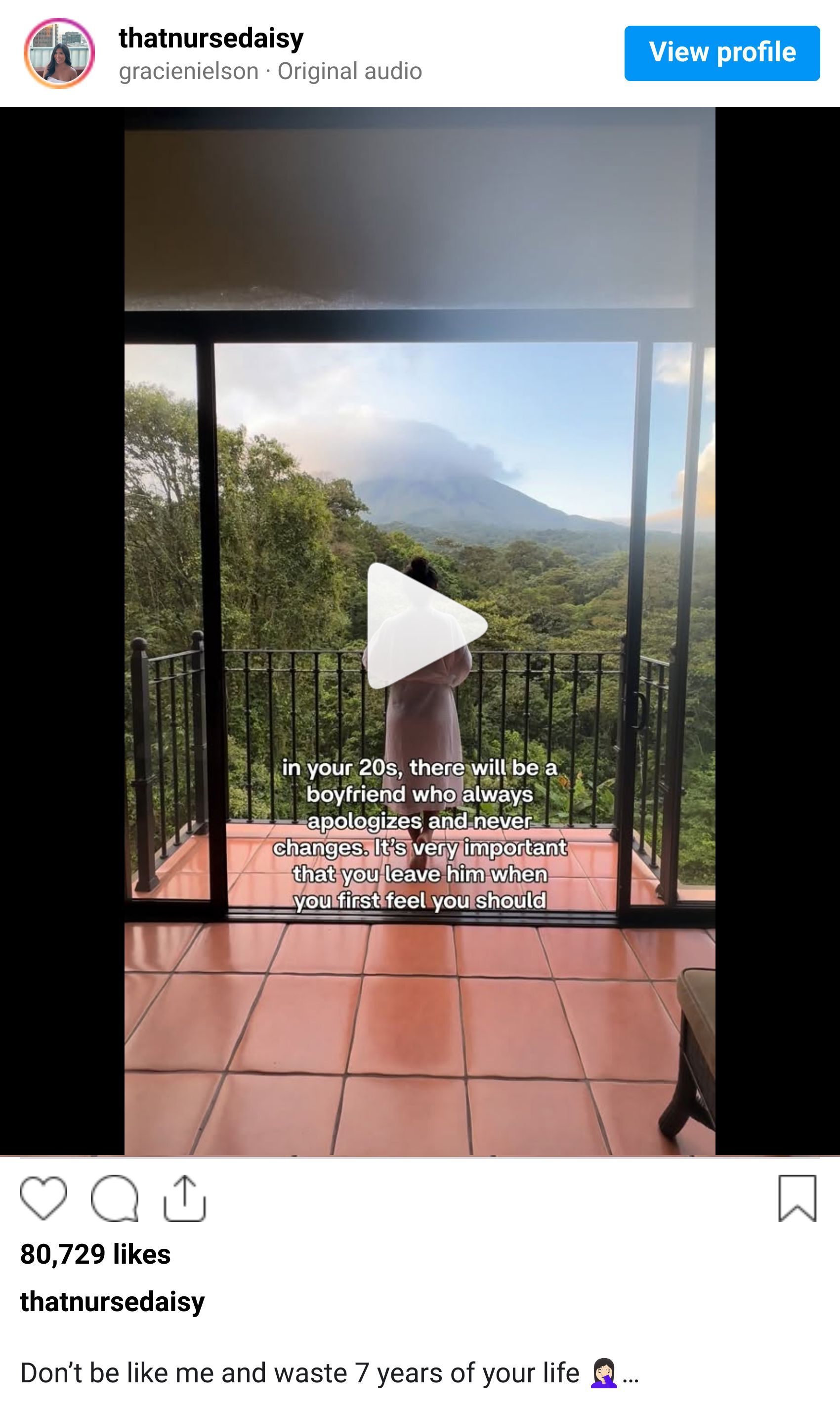
“In your 20s there will be a dog. It’s very important that you get that dog.” Try not to feel something as you watch a furry best friend change someone’s life forever. That’s one example of the viral “in your 20s…” trend on socials that’s spawned riffs that are everything from heartwarming to snarky, as people share life changing moments big and small.
💬 Why it matters for therapists
The end of the year breeds nostalgia and reflection, and this viral version is as heartwarming as TikTok trends can be. It invites reflection on the moments that we realize only in retrospect changed our life for good.
🪞 How it may show up in the room
The end of year inspiring reflection on key moments.
“If only I knew then what I know now.”
Hope or camaraderie bolstered by hearing others’ stories.
🛋️ What therapists can do
Guide clients toward reflection without shame or guilt.
“When you’re 80 or 90, looking back at your life, what will you see?”
Use mindful awareness to explore small moments that hold great meaning.
🔗 Go deeper
“Latest Trend Report: In Your 20s, Flow State & Stranger Things” — Trending Now Substack, Nov 2025
“Looking back on life: An updated meta-analysis of the effect of life review therapy and reminiscence on late-life depression” — Journal of Affective Disorders, 2024
💡 The bottom line
Things in the rear-view mirror are much more impactful than they appear at the time. This is a rare example of a TikTok trend I think does belong in the therapy room.
🎬 YouTube’s Personalized Trend Report Tells on Us
🧩 What’s happening
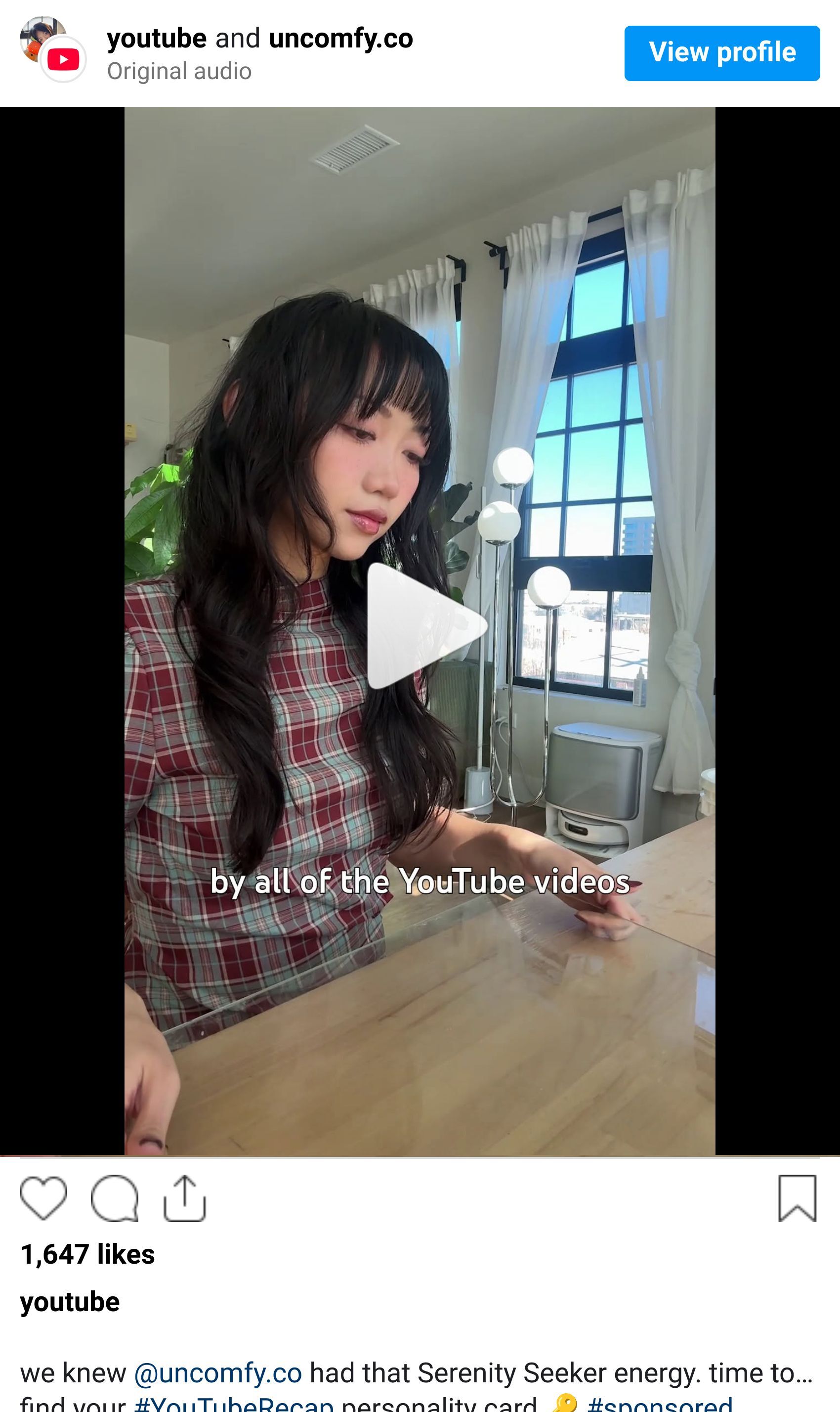
“I got a true glimpse of my inner soul.” That’s what one creator wrote of their YouTube Recap, a new Spotify-style review that YouTube just launched along with its overall report of 2025 trends. There are the predictable hits—Squid Game, Labubu, Charlie Kirk, KPop Demon Hunters, Roblox UGC, and Joe Rogan—but also the occasional wildcard. This year’s surprise: Connie Francis’ 1962 “Pretty Little Baby” went from unknown to viral, giving the 87-year-old the flash of much-delayed fame.
💬 Why it matters for therapists
With 2.7 billion monthly active users, including around 84% of adults in the US, YouTube’s Recap acts like a mirror—sometimes flattering, sometimes not—reflecting desires, cultural identities, and the emotional self-soothing rituals clients might not articulate out loud. What we see? Dystopian spectacle, maximalist cuteness, culture warriors, and hyper-fantasy.
🪞 How it may show up in the room
Identity influenced over time by viewing habits.
Disorientation from living with parallel digital and offline selves.
Mood shifts linked to binge-watching or algorithmic spirals.
🛋️ What therapists can do
Trace emotional themes beneath consumption patterns.
Explore how clients curate (or dodge) their inner worlds.
Normalize digital habits while helping clients claim agency.
🔗 Go deeper
“The Defining Cultural Trends of 2025, According to YouTube” — NPR, Dec 2025
“The Topics, Creators, Music, and Podcasts that Defined 2025” — YouTube, Dec 2025
“Understanding the Phenomenon of Binge Watching—a Systematic Review” — International Journal of Environmental Research and Public Health, 2020
💡 The bottom line
YouTube didn’t just recap your year, it reflected your psyche and priorities back to you. It’s not just entertainment—it’s autobiography, mood board, and unconscious diary all at once.
NOT sponsored 😃
🪷 Resource: Free Therapist Hub from Insight Timer
This newsletter is free, ad-free, and sponsor-free ✌️ but when I see something that could be useful, I’d like to share.
The Insight Timer App recently launched a Therapist Hub that allows providers to access and curate free resources in 50 languages. Full disclosure: I just started my therapist account—so no endorsement or review of it yet, but it looks promising. If you’d like to give it a try, you can sign up and build your profile here.
Morally grey MMCs coming up…
In next week’s issue, we’ll look at men written by women and men reading women. Stay tuned for a psychotherapeutic look at the High Lord of the Night Court and “performative males” drinking matcha.
As always, my inbox is open. Have feedback, and idea to share, or want to collab? [email protected].
